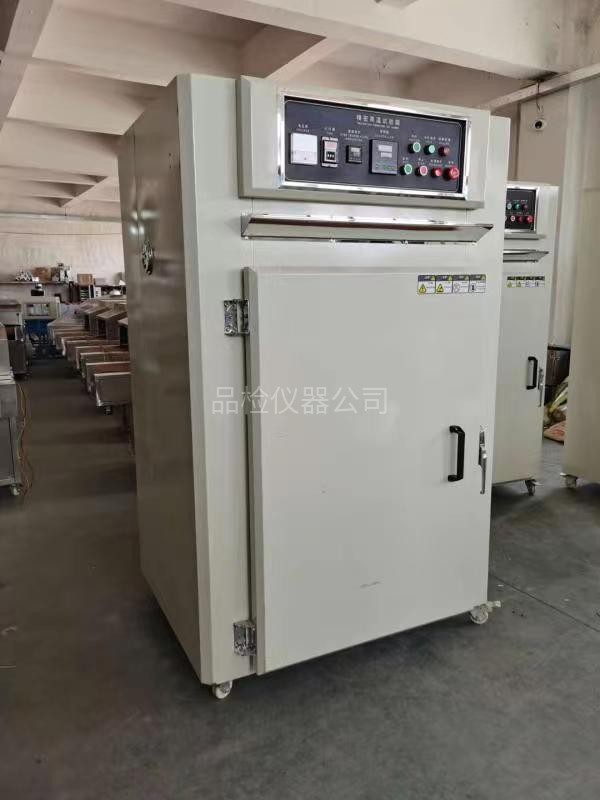
Sponge and Foam Permanent Compression Set Testing Machine
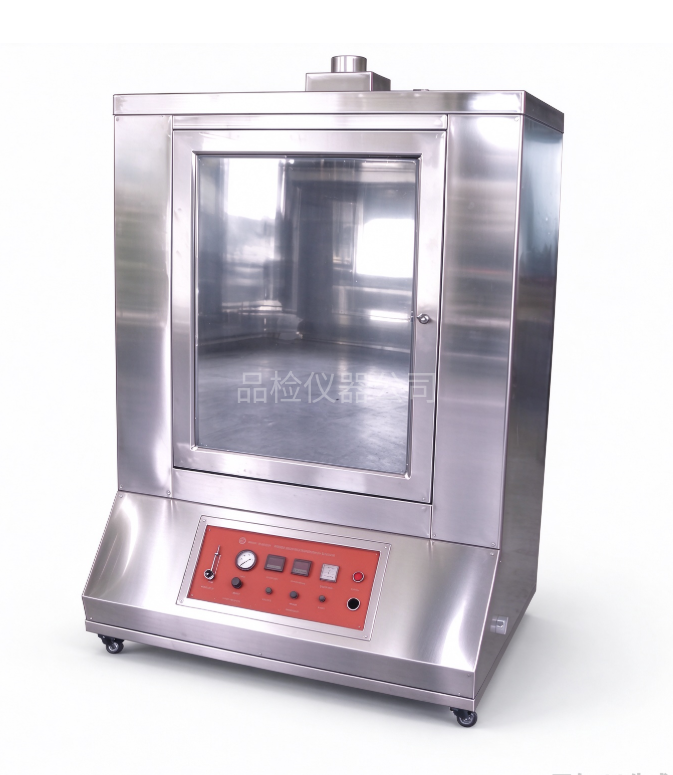
The Sponge and Foam Permanent Compression Set Testing Machine is a professional instrument designed to evaluate the recovery capability of sponge materials after prolonged compression under constant pressure and elevated temperature. It performs high-temperature testing to assess deformation performance and complies with GB/T 6669-2008 (Method for Determination of Compression Set).
| Model | QC-YJ2-225 |
|---|---|
| Size | W600XD500xH750mm |
| Weight | 60KG |
| Category | Sponge and Foam Hardness, Fatigue, Resilience, and Density Testing Machines |
| Heating Power | 5 kW |
| Operating Temperature Range | Ambient +10 °C to 200 °C; accuracy ±1–1.5 °C; user-selectable setpoint |
| Exterior Material | Powder-coated steel |
| Heating Rate | 5–8 °C/min |
| Published | 2026-11-25 |
views:1
Overview
The Sponge and Foam Permanent Compression Set Testing Machine is a specialized instrument for evaluating the recovery capability of sponge materials after extended compression under constant pressure and elevated temperature. High-temperature testing enables precise assessment of deformation performance.
Key Features:
1. Sample Chamber: Tray-style sample placement; separated from the heating chamber by a steel baffle plate (air barrier).
2. Heating Chamber: Houses electric heating elements and generates heated air; equipped with an integrated blower that delivers hot air into the sample chamber.
3. Hot Air Delivery: A circulation fan directs heated air through ducts and into the sample chamber via small holes in the tray support structure. Dual-side airflow ensures uniform thermal distribution.
4. Heating System: Electric heating unit with finned-tube heat exchanger design.
7. Ventilation and Dehumidification System: Maintains continuous air circulation between the heating and sample chambers, enabling internal air exchange and sustaining required process conditions. Includes cold-air intake damper and moisture exhaust port; configuration varies by model.
8. Temperature Control System: Monitors, displays, and regulates process temperature during testing. Comprises temperature sensors, main control unit, and actuators. Enables fully automated thermal control via modulation of heating output.
Main Technical Specifications:
1. Chamber Volume: 225 L
2. Internal Dimensions: W600 × D500 × H750 mm; External Dimensions: W1050 × D900 × H1560 mm
3. Power Supply: 380 V, 50 Hz
4. Heating Power: 5 kW
5. Operating Temperature Range: Ambient +10 °C to 200 °C; accuracy ±1–1.5 °C; user-selectable setpoint
6. Temperature Uniformity: ±2% (empty chamber)
7. Airflow System: Dual-channel horizontal recirculating airflow
8. Exterior Material: Powder-coated steel
9. Interior Liner Material: Stainless steel
10. Heating Elements: Stainless steel tubular electric heaters
11. Insulation: 100 mm thick glass wool
12. Blower Motor: 750 W
13. Temperature Controller: PID digital controller with LED display, keypad input, and automatic constant-temperature operation
14. Temperature Sensor: Pt100 platinum resistance thermometer
15. Timer Function: 0–999 minutes; automatic heater cutoff and audible alert upon completion
16. Safety Protection: Short-circuit, overload, motor thermal overload, and phase-loss protection
17. Fixture Specifications: Compliant with GB/T 6669, ISO 1856 Method A, ASTM D3574, and JIS K6400-7
Sample Requirements: 50 mm × 50 mm × 25 mm
Compression Fixture: Two-tier design accommodating up to eight specimens
Compression Ratios: 50% (ring spacer thickness: 12.25 mm), 75% (18.75 mm), 90% (22.5 mm)
Temperature Control System:
1. Temperature Distribution: ±2 °C (empty chamber)
2. Heating Rate: 5–8 °C/min
3. PID microprocessor-based control with simultaneous PV/SV digital display; user-defined setpoints within operational range; self-tuning PID algorithm ensures optimal temperature stability and accuracy
4. Input Signal: Type K thermocouple (CA); 12 V output
5. Solid-State Relay (SSR) current controller for stable, contactless power regulation
6. Heating Element: Honeycomb stainless steel heating tubes—non-polluting and long service life
Air Circulation System:
1. Forced convection recirculation: Blower-driven airflow passes through heating elements and ducts into the chamber; used air is drawn back into the duct system for reheating, minimizing energy loss and ensuring uniform internal temperature. Rapid thermal recovery following door opening/closing disturbances.
2. Motor: Imported Taiwanese high-temperature, long-shaft motor (1 HP, 50 Hz)
3. Fan: Multi-blade turbine-type impeller with high structural integrity; integrated adjustable flow guide vanes for optimized airflow efficiency.