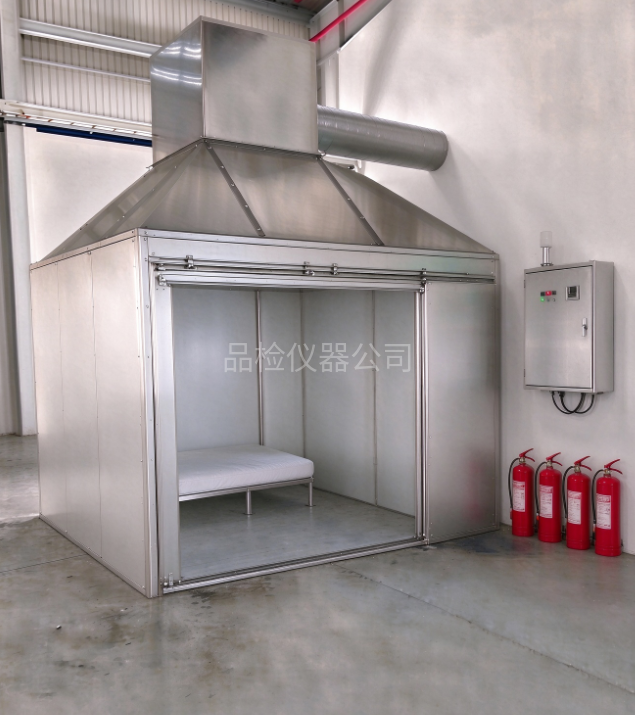
Furniture, Sofa, and Mattress Ignition Test Machine
The Furniture, Sofa, and Mattress Ignition Test Machine simulates standardized ignition sources—including cigarette flame, match flame, and wood crib flame—under controlled airflow, temperature, and humidity conditions to evaluate the ignition resistance of mattresses, sofas, and upholstered furniture components.
| Model | QC-7927 |
|---|---|
| Size | 20m³ |
| Weight | 1吨 |
| Category | Foam Hardness, Fatigue, Resilience, and Density Testing Machines |
| Power Supply | AC 220 V, 50 Hz |
| Cigarette Specifications | Length: 55±5 mm; diameter: 8±0.5 mm; linear mass: 0.6±0.1 g/50 mm; burn rate: 12±3 min/50 mm |
| Match-Flame Specifications | Burner tube: OD 8.0±0.1 mm, ID 6.5±0.1 mm, length 200±5 mm; butane purity ≥99.9%; flow rate 45±2 mL/min (25°C), nominal pressure 2.8 kPa; hose: 2.5–3 m, ID 7±1 mm; includes pressure regulator, micro-flow meter, shutoff valve, and igniter |
| Wood Crib Specifications | Pine sticks: 40±2 mm long, cross-section 6.5±0.5 × 6.5±0.5 mm, 10 sticks; cotton gauze: 40±2 × 40±2 mm; total stick mass 8.5±0.5 g; ethanol dispenser calibrated for 1.4±0.1 mL of 95% ethanol |
| Published | 2026-11-25 |
views:1
Overview
I. Equipment Overview
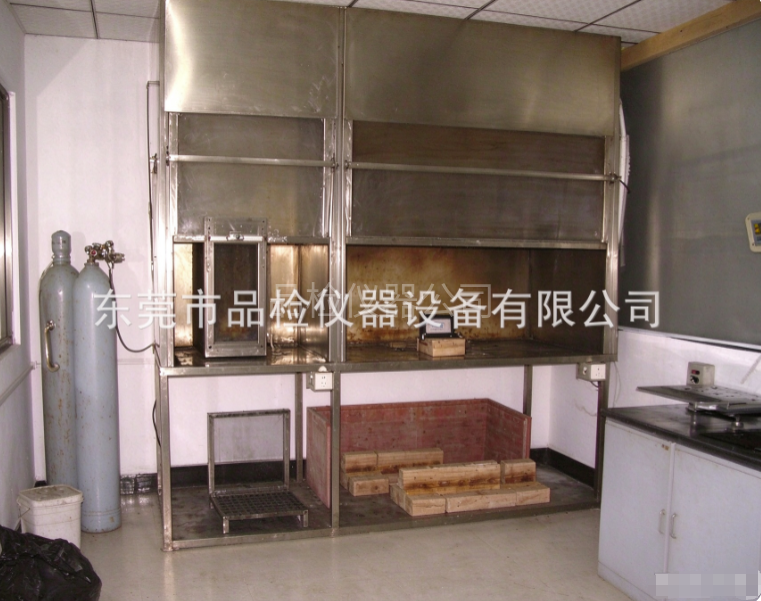
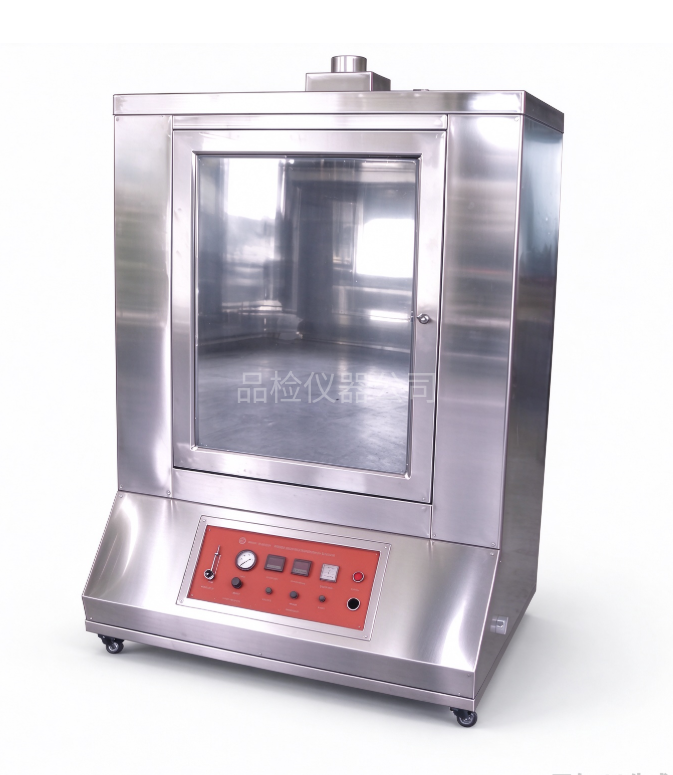
This machine conducts standardized ignition resistance evaluation tests on mattresses, sofas, and upholstered furniture components under precisely controlled environmental conditions (airflow, temperature, and humidity). It integrates three certified ignition source systems: a standard cigarette igniter, a butane match-flame simulator, and a wood crib igniter. The system includes a walk-in combustion test chamber, a robust test platform, integrated timing and observation capabilities, and comprehensive safety protection.
Designed to replicate the most common real-world ignition sources, the machine assesses whether test specimens exhibit smoldering or flaming spread—supporting in-house quality control, R&D validation, and third-party type testing for flame-retardant classification (Class I / II / III).
Environmental Control Requirements: Airflow velocity within the test zone is maintained at 0.02–0.2 m/s without disturbing combustion; the test chamber volume must be ≥20 m³ or equipped with a compliant ventilation system ensuring both adequate oxygen supply and efficient smoke extraction.
II. Key Functional Capabilities
1. Cigarette Ignition Test (Flame-Retardant Class I): Uses standardized cigarettes; observation period up to 60 min; evaluates onset of smoldering or flaming spread.
2. Match-Flame Simulation Test (Flame-Retardant Class II): Butane-fueled burner with precision flow control; flame application time 15±1 s; post-ignition observation continues for 15 min.
3. Wood Crib Ignition Test (Flame-Retardant Class III): Standardized pine stick crib (10 sticks) with ethanol-assisted ignition; monitoring begins at 10 min and continues for 50 min (up to 60 min total).
4. Timing & Data Capture: Timer range ≥60 min, resolution 1 s; records ignition start, first ignition event, and extinguishment time.
5. Observation & Documentation: Large, heat-resistant tempered glass viewing window; enables visual documentation of combustion behavior and precise measurement of charred area dimensions (length, width, depth).
6. Gas Supply & Flow Control: Butane gas line with pressure regulation, stabilization, fine-flow adjustment, valve interlocking, and leak detection.
7. Specimen Support: Heavy-duty, level test platform accommodating full-size mattresses and sofas; designed for stable placement at critical zones including sofa corners, tufted seams, and perimeter edges.
8. Safety Protection: Independent exhaust system, fire suppression interface, automatic gas shutoff, high-temperature shielding, and chamber door safety interlock.
9. Data Output: Automatically logs ignition status, char extent, and pass/fail determination; supports generation of standardized test reports.
III. Technical Specifications (Compliant with GB/T 17927–2024)
Test Chamber: Walk-in structure with heat-resistant tempered glass observation window; dedicated inlet and top-mounted exhaust; airflow control 0.02–0.2 m/s; integrated smoke exhaust; fire-rated, thermally insulated construction.
Test Platform: Flat, high-strength, vibration-dampened surface capable of securely supporting mattresses and sofas.
Timing Device: Range ≥60 min; accuracy ±1 s.
Cigarette Ignition Assembly: Cigarette dimensions: length 55±5 mm, diameter 8±0.5 mm; linear mass 0.6±0.1 g/50 mm; burn rate 12±3 min/50 mm; includes precision cigarette holder.
Match-Flame Ignition Assembly: Burner tube: OD 8.0±0.1 mm, ID 6.5±0.1 mm, length 200±5 mm; butane purity ≥99.9%; flow rate 45±2 mL/min (25°C), nominal output pressure 2.8 kPa; flexible hose 2.5–3 m long, ID 7±1 mm; includes pressure regulator, micro-flow meter, shutoff valve, and piezoelectric igniter.
Wood Crib Ignition Assembly: Pine sticks: 40±2 mm long, cross-section 6.5±0.5 × 6.5±0.5 mm, 10 sticks total; cotton gauze pad: 40±2 × 40±2 mm; total stick mass 8.5±0.5 g; ethanol dispensing tool calibrated for 1.4±0.1 mL of 95% ethanol.
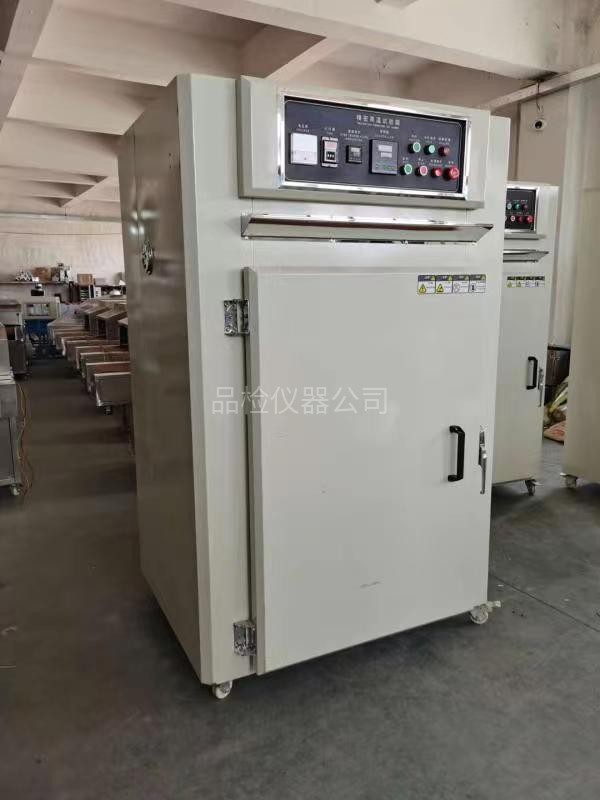
Preconditioning Environment: Conditioning chamber: 23±2 °C, 50±5% RH; specimen and ignition sources preconditioned ≥24 h.
Test Ambient Conditions: Temperature 10–30 °C; relative humidity 15–80%.
Power Supply: AC 220 V, 50 Hz; fuel: high-purity butane cylinder (externally connected).
IV. Standardized Test Procedures
4.1 Specimen Preconditioning
Specimens, cigarettes, and wood cribs are conditioned together at 23±2 °C and 50±5% RH for ≥24 h. Tests must commence within 20 min (cigarette/match) or 5 min (wood crib) after removal from conditioning.
4.2 Cigarette Ignition Test (Class I)
1. Place specimen stably on platform: mattress ≥100 mm from edge; sofa at seam intersections, tufted depressions, or other high-risk zones (≥50 mm from prior marks); double-sided products tested on both sides.
2. Light cigarette to stable glowing tip; burn down 5–8 mm; place horizontally at designated location; initiate timer simultaneously.
3. Observe continuously for 60 min; extinguish immediately upon flaming ignition, hazardous smoldering, or excessive spread.
4. At test end, dissect specimen to inspect for hidden smoldering; measure char dimensions.
5. Pass criterion: No smoldering or flaming ignition observed throughout entire duration.
4.3 Match-Flame Test (Class II)
1. Position specimen; stabilize butane flow at 45±2 mL/min; pre-burn ≥2 min for thermal equilibrium.
2. Apply burner tube horizontally to designated location for 15±1 s; withdraw and begin timed observation.
3. Brief flaming extinguished spontaneously within first 2 min is disregarded; monitor for ignition between 2–15 min post-withdrawal; extinguish immediately if ignition occurs.
4. At 15 min, dissect specimen and record char extent.
5. Pass criterion: No ignition observed during monitored interval or internal inspection.
4.4 Wood Crib Test (Class III)
1. Preconditioned wood crib and specimen placed per standard: mattress ≥170 mm from edge; sofa at triple-junction points or crevices.
2. Apply 1.4±0.1 mL of 95% ethanol onto gauze; ignite and start timer. Repeat test if crib collapses prematurely.
3. Ignition events occurring before 10 min are excluded; monitor specimen for ignition from 10–60 min.
4. At 60 min, dissect specimen to check for concealed smoldering.
5. Pass criterion: No ignition observed during 10–60 min interval or internal inspection.
4.5 Universal Ignition Criteria
Ignition is confirmed if any of the following occur:
— Progressive smoldering or complete upholstery burn-through;
— Lateral charring exceeding 100 mm;
— Sustained flaming or flaming drips persisting beyond defined time thresholds.
V. Calibration & Maintenance Guidelines
1. Periodic Calibration: Timer, flow meters, pressure gauges, and environmental sensors require scheduled calibration; burner tube dimensions, cigarette specs, and wood crib geometry must be verified regularly.
2. Gas System Maintenance: Conduct routine leak checks on butane lines; replace aging rubber hoses promptly; always close cylinder valve after each test.
3. Chamber Maintenance: Remove soot and residue after every test; maintain optical clarity of viewing window; clean exhaust fan periodically.
4. Consumables Management: Cigarettes, pine sticks, gauze, and hoses are single-use or limited-life items; manage via batch traceability.
5. Recordkeeping: Maintain equipment logbook, calibration certificates, maintenance history, and raw test data archives.
VI. Safety Requirements
1. Install in a dedicated, isolated area away from flammable/explosive materials; equip with appropriate fire suppression devices.
2. Install emergency gas shutoff valve on all fuel lines; perform leak test prior to each operation.
3. Operators must wear safety goggles and heat-resistant PPE during testing.
4. Combustion gases are toxic; ensure chamber remains sealed during operation and allow full exhaust cycle post-test.
5. Confirm specimen is fully extinguished and residual heat dissipated before leaving the test area.