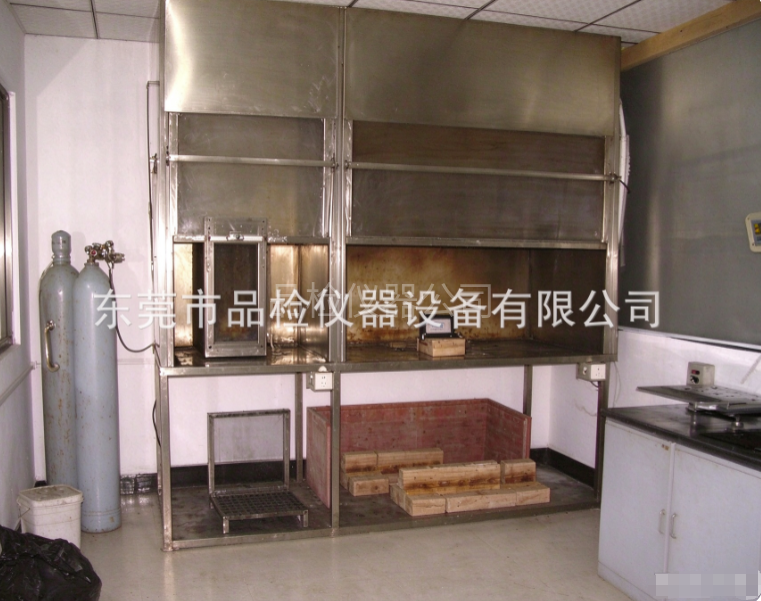
BS5852 Ignition Resistance Tester
The BS5852 Ignition Resistance Tester evaluates the ignition risk of upholstered fabrics and foam-filled composite assemblies when exposed to cigarette embers, match flames, open flames, and wooden cribs. Widely used for fire safety certification testing in upholstered furniture, wheelchair cushions, and soft interior materials—configurable as standalone test stations or integrated test cabinets.
| Model | QC-5852 |
|---|---|
| Category | Foam and Sponge Hardness, Fatigue, Resilience, and Density Testers |
| Standard Compliance | BS 5852:2006 |
| Power Supply | AC 220 V ± 10%, 50 Hz |
| Fuel Source | Industrial butane |
| Gas Flow Range | 40–400 mL/min |
| Timing Resolution | 0.1 s (up to 60 min) |
| Pressure Gauge Range | 0–6 kPa |
| Chamber Volume | ≥0.5 m³ |
| Dimensions (W × D × H) | 1160 × 600 × 1250 mm |
| Weight | ≈80 kg |
| Published | 2026-11-25 |
views:1
Overview
The BS5852 Ignition Resistance Tester complies with BS 5852:2006—the UK standard for assessing the ignitability of upholstered seating materials under smoldering and flaming ignition sources. It is designed for fire resistance testing of sofas, upholstered seats, cushions, and fabric–foam composite components, commonly applied alongside UK furniture fire safety regulations (e.g., RISE). The core methodology involves mounting specimens at a 90° seat-back angle within a controlled airflow, temperature, and humidity environment, then applying standardized ignition sources (No. 0–7) and recording flame persistence, smolder duration, and char spread to determine pass/fail compliance.
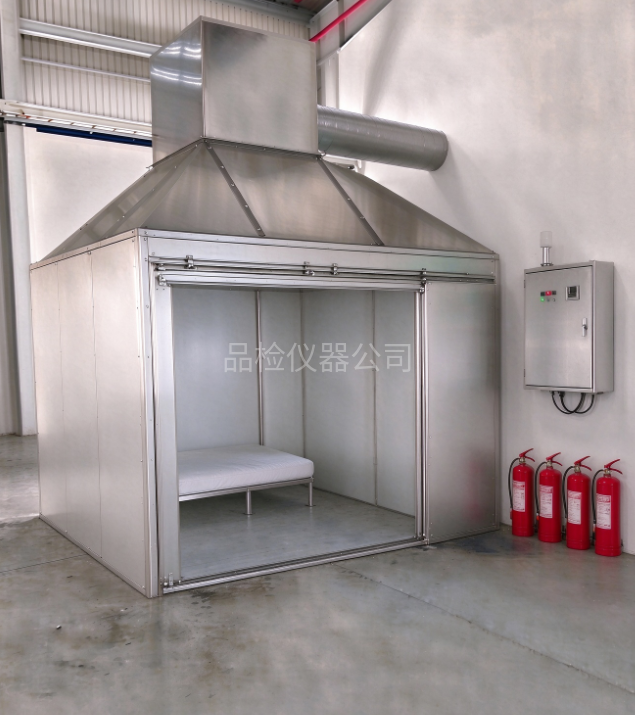
Test Cabinet
I. Application & Principle
Application: Evaluates ignition risk of upholstered fabrics and foam-filled composites exposed to cigarette embers, match flames, open flames, and wooden cribs. Widely deployed in laboratories for certification testing of upholstered furniture, wheelchair cushions, and soft-furnishings materials.
Principle: Simulates real-world ignition scenarios inside a low-turbulence, environmentally controlled chamber. Standardized ignition sources are applied for prescribed durations; subsequent flaming, smoldering, and char propagation are observed and assessed against regulatory pass/fail criteria.
Environmental Control: Ambient test conditions are maintained at (27 ± 3)°C, 45–70% RH, and chamber airflow of 0.02–0.2 m/s—to prevent flame extinction or accelerated spread. Specimens undergo standardized preconditioning per humidity and temperature requirements.
II. System Configuration
1. Test Chamber / Combustion Cabinet
Black interior walls and low-illumination viewing cavity with observation window and dedicated exhaust ventilation—ensuring unobstructed flame observation while safely removing smoke. Minimum internal volume: ≥0.5 m³.
2. Specimen Mounting Frames (two standard sets)
Stainless steel heat-resistant wire mesh frames:
- Small frame: 450 × 300 × 150 mm
- Large frame: 450 × 450 × 300 mm
Both configured to hold fabric–foam composites at a precise 90° seat-back angle, maintaining standardized tension and geometry.
3. Gas Ignition System (Sources No. 1, 2, 3)
Stainless steel burner tubes (OD ≈ 8 mm, ID ≈ 6.5 mm, length ≈ 200 mm), industrial butane supply, precision pressure regulator, flowmeter, and pressure gauge—enabling accurate control of gas flow rate, flame height, and ignition timing.
4. Standardized Ignition Sources
No. 0: Standard non-filter cigarette (smoldering source): Length 68 ± 2 mm, diameter 8 ± 0.5 mm, mass 0.85 ± 0.15 g; smolder rate: 12 ± 3 min / 50 mm (certified reference value).
No. 1/2/3: Butane gas flames (flaming sources).
No. 4–7: Standardized Scots pine wooden cribs (pre-soaked in isopropanol), graded by increasing heat release. Equivalent Russian pine may be used domestically following thermal value validation. Wood strips: defect-free, resin-free, moisture-controlled; cross-section: 6.5 × 6.5 mm square.
5. Measurement & Control Unit
Touchscreen or digital controller, high-precision timer (0.1 s resolution, up to 60 min smolder observation), calibrated scale for char measurement, automatic gas cutoff, and audible/visual alarms.
6. Safety Components: Gas tubing with flame arrestor, emergency stop button, and dedicated exhaust ducting.
III. Technical Specifications (Typical Commercial Model)
- Power Supply: AC 220 V ± 10%, 50 Hz
- Fuel Source: Industrial-grade butane; flow range: ~40–400 mL/min
- Timing Range: 0–999.9 s (standard); extended mode up to 60 min
- Pressure Gauge Range: 0–6 kPa
- Approximate Dimensions: 1160 × 600 × 1250 mm (W × D × H); weight: ~80 kg
- All burner dimensions, gas flow rates, flame heights, crib dimensions, weights, and assembly methods strictly conform to BS 5852:2006 requirements.
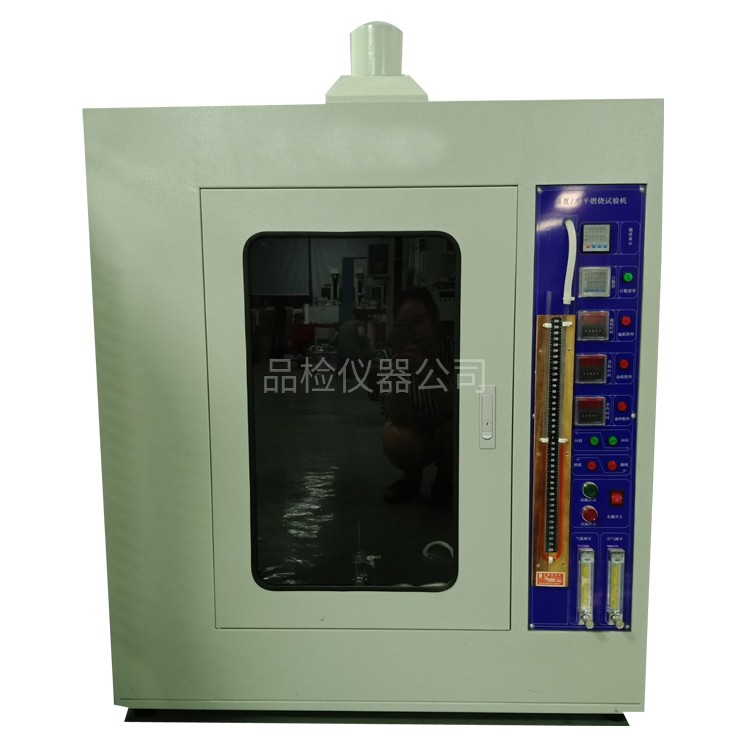
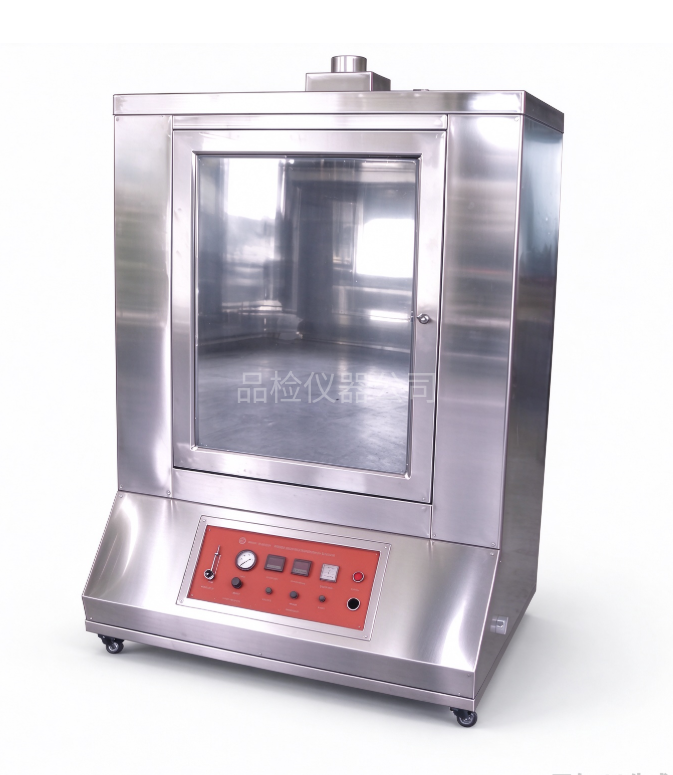
Standalone Flame Test Station – Match Flame Simulation
IV. Eight-Tier Ignition Source Overview & Key Pass/Fail Criteria
[Refer to embedded table image]
Key Compliance Criteria: Open flames must self-extinguish within specified time limits after removal of gas burners; wooden cribs must show no sustained flaming after designated exposure; smoldering and char propagation must remain within defined thresholds (per RISE requirements).
V. Key Features
- Standardized Simulation: Fully replicates prescribed ignition sources, specimen geometry, and environmental parameters—ensuring inter-laboratory result comparability.
- Graded Testing Capability: Supports evaluation across eight ignition severity levels—from low-risk cigarette embers to high-intensity wooden cribs—for comprehensive fire performance verification.
- Integrated Safety: Gas pressure stabilization, automatic fuel shutoff, and active smoke extraction.
- Cross-Standard Compatibility: Can be adapted for related standards including ISO 7176‑16 (wheelchair flammability).
VI. Simplified Test Workflow
1. Condition specimens per standard requirements; assemble fabric–foam composites on mounting frame at 90° angle.
2. Stabilize chamber airflow, temperature, and humidity.
3. Position appropriate ignition source and initiate timing sequence.
4. Remove gas burner per standard timing—or monitor wooden crib combustion.
5. Record onset/cessation of flaming, smolder behavior, and char dimensions.
6. Compare results against pass/fail criteria for the applicable ignition source level; generate compliant test report.
VII. Important Notes
- Wooden cribs and reference cigarettes are consumable certified standards—source traceability and periodic verification are mandatory.
- Regular gas line leak checks, adequate ventilation, and fire prevention protocols are laboratory safety requirements.
- BS 5852 assesses *composite systems* (fabric + filling)—not individual materials. Only results from fully assembled, representative composites are valid for compliance.