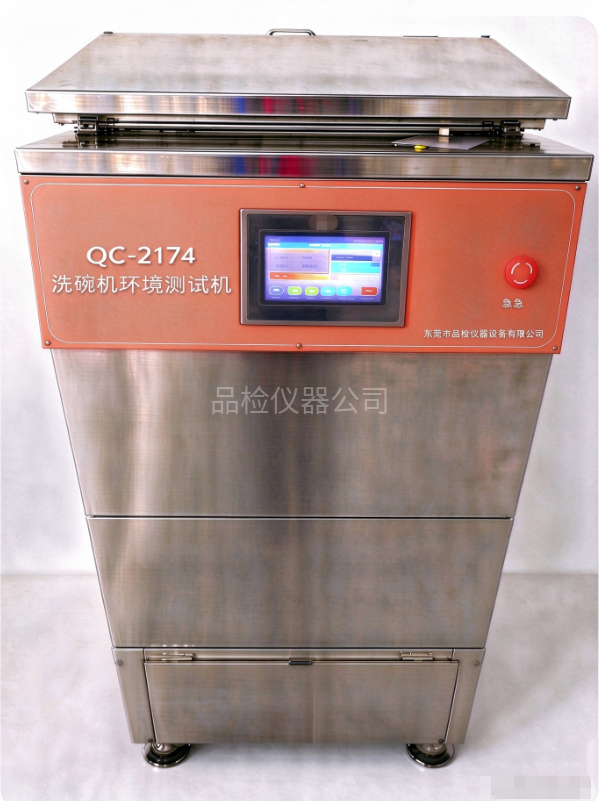
Dishwasher Durability Tester for Non-Stick Coatings
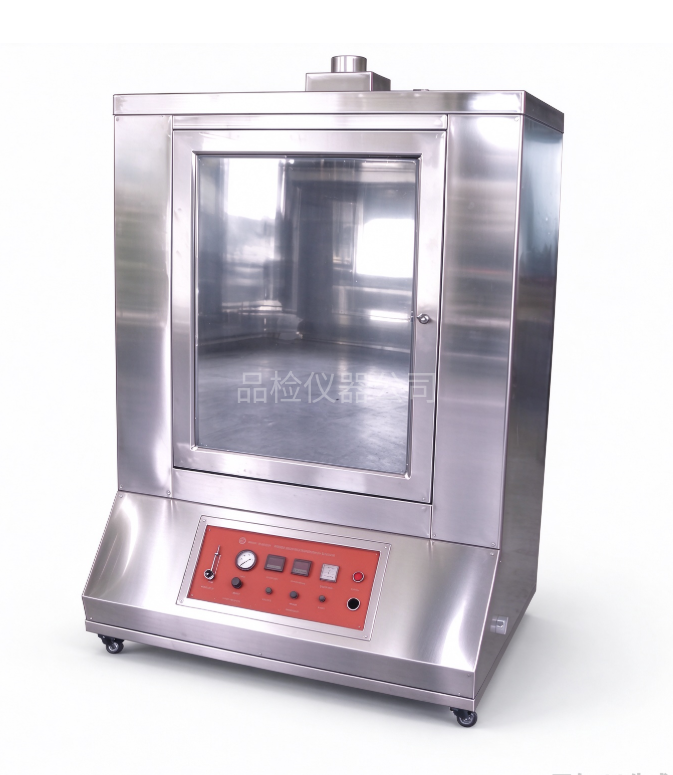
This tester subjects cookware samples to repeated dishwasher cycles to evaluate changes in non-stick performance. The standardized dishwasher cycle comprises pre-rinse, wash, intermediate rinse, rinse with rinse aid, and drying stages.
| Model | QC-2174 |
|---|---|
| Size | 600*600*800 |
| Weight | 30KG |
| Category | GB/T 32095 Testing Equipment for Metal Cookware |
| Power Supply | 220 V |
| Control Interface | Touchscreen |
| Construction Material | Exterior: Powder-coated steel; Interior: Stainless steel |
| Published | 2026-11-19 |
views:10
Overview
I. Application
This equipment simulates long-term, cyclic dishwasher environments—both commercial and domestic—for cookware, tableware, and kitchen utensils. It replicates the full dishwasher process (washing, rinsing, and drying) to assess the resistance of surface coatings (e.g., non-stick, enamel, baked-on finishes), substrates, and printed markings to aging induced by detergents, rinse aids, and hot water alternation. Ideal for dishwasher durability testing of non-stick pans, baking trays, stockpots, cutlery, and other coated kitchen products.

II. Standard Test Cycle (Single Cycle = Steps a–e)
> A complete test consists of 15 consecutive repetitions of steps a–e.
> a) Pre-Rinse Stage
> Fill the dry test chamber with water; rinse for 5 min ± 0.5 min, then fully drain.
b) Detergent Wash Stage
Fill chamber with water; add detergent at a ratio of 24 g ± 3 g per 6 L ± 0.5 L water. Initiate washing and heating; maintain wash for 20 min ± 1 min while raising water temperature to 60 ℃ ± 2 ℃, then continue washing without heating for 10 min ± 1 min, followed by full drainage.
c) Intermediate Rinse Stage
Fill chamber with water; rinse for 3 min ± 0.5 min, then fully drain.
d) Rinse-Aid Stage
Fill chamber with water; start washing and heating. Add rinse aid when water reaches 40–45 ℃ (ratio: 2.5–3.0 g per 6 L ± 0.5 L water); continue heating to 65 ℃ ± 2 ℃, then fully drain.
e) Drying Stage
Close and seal the chamber door; dry for 10 min ± 1 min. After drying, open the door and allow sample to stand openly for 30 min.
f) Cycle Requirement
Steps a–e constitute one full cycle. Repeat continuously for 15 cycles to complete the full dishwasher aging test.
III. Key Functional Features
1. Fully Automated Program Control: Pre-programmed sequences handle automatic water filling, heating, agitation, draining, timing, and drying—no manual intervention required.
2. Precision Temperature Control: Integrated temperature sensing with PID regulation ensures ±2 ℃ thermal accuracy.
3. Formulated Chemical Dosing Alerts: Configurable prompts or timed windows for detergent and rinse aid addition at specified temperatures.
4. Cycle Counter: Automatically tracks and logs cycles; triggers audible alarm and shutdown upon reaching the preset 15-cycle limit.
5. Sealed Test Chamber Door: Enables controlled sealed drying and timed post-dry ventilation.
6. Precise Water-Level Management: Ensures consistent fill volume per cycle (6 L ± 0.5 L) to meet formulation requirements.
7. Optimized for Cookware Testing: Validated for evaluating dishwasher resistance of non-stick coatings, enamel, printed logos, and related surface treatments—designed for integration into kitchenware quality control laboratories.
IV. Applicable Samples
Non-stick cookware including frying pans, baking sheets, stockpots, cutlery, and other coated kitchen utensils.